
Feb 24, 2026
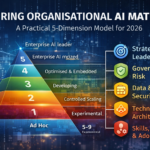
Measuring Organisational AI Maturity: A Practical Scoring Model

Vendor Selection
IT & AI Vendor Selection ensures organisations choose the right technology partners through structured evaluation, risk assessment, compliance checks, and value analysis—maximising ROI, minimising delivery risks, and aligning solutions with strategic business objectives.
Key Benefits of our Vendor Selection approach
IT & AI Vendor Selection combines technical evaluation, commercial due diligence, AI governance assessment, and structured scoring frameworks to identify vendors that align with business strategy, regulatory requirements, scalability needs, and long-term innovation goals.
01
Strategic Requirement Mapping
Aligns business objectives, technical architecture, compliance requirements, and AI governance standards to clearly define functional and non-functional requirements before engaging vendors.
02
Structured RFP & Evaluation Framework
Develops weighted scoring matrices, capability benchmarks, and proof-of-concept assessments to objectively compare vendors across technical, financial, and operational dimensions.
03
AI Governance & Compliance Assessment
Evaluates vendors against regulatory frameworks, data privacy laws, ethical AI standards, security certifications, and risk management controls to ensure responsible and compliant AI adoption.
04
Commercial & Contractual Due Diligence
Assesses pricing models, licensing structures, total cost of ownership, SLAs, IP ownership clauses, and long-term scalability to mitigate financial and contractual risks.
05
Risk & Delivery Capability Analysis
Reviews vendor track record, delivery methodology, implementation capability, support model, and reference projects to reduce execution risks and ensure sustainable partnerships.
The Vendor Selection Roadmap
The IT & AI Vendor Selection process begins with defining strategic and technical requirements, followed by structured market engagement and evaluation. Vendors are assessed through scoring frameworks, proof-of-concepts, risk reviews, and commercial analysis to ensure an informed, transparent, and defensible selection decision.
Conduct stakeholder workshops to capture business objectives, compliance constraints, AI governance requirements, and technical specifications. Develop evaluation criteria, weighted scoring models, risk frameworks, and RFP documentation to ensure clarity, fairness, and measurable comparison standards.
Issue RFP/RFI documents, manage vendor briefings, and conduct structured evaluations including technical demonstrations, proof-of-concept testing, security assessments, and reference checks. Apply scoring matrices and risk assessments to ensure objective, transparent, and evidence-based decision-making.
Perform commercial negotiations, final risk reviews, SLA validation, and contract structuring. Establish governance frameworks, implementation oversight plans, and performance KPIs to ensure successful onboarding and long-term value realisation from the selected IT or AI partner.
FAQ – IT & AI Vendor Selection
Why is a structured IT & AI Vendor Selection process important?
A structured vendor selection process ensures decisions are objective, transparent, and aligned with strategic business goals. It reduces implementation risk, avoids hidden costs, strengthens compliance posture, and ensures selected vendors meet technical, security, scalability, and AI governance requirements. This approach protects long-term ROI and supports sustainable digital transformation.
How do we evaluate AI vendors for compliance and ethical standards?
AI vendors should be assessed against data protection regulations, AI governance frameworks, model transparency standards, bias mitigation practices, cybersecurity certifications, and audit capabilities. Evaluating documentation, testing processes, explainability features, and regulatory readiness ensures the AI solution is responsible, compliant, and aligned with organisational risk tolerance.
What factors should be considered beyond pricing?
While cost is important, organisations must assess total cost of ownership, scalability, integration capability, delivery methodology, vendor financial stability, customer references, support models, and long-term roadmap alignment. Selecting purely on price often increases risk, whereas a value-based evaluation ensures better operational and strategic outcomes.
How can proof-of-concept (PoC) testing improve vendor selection?
Proof-of-concept testing validates real-world performance before full commitment. It enables organisations to test integration capabilities, AI model accuracy, security controls, user experience, and operational fit. PoCs reduce uncertainty, provide measurable performance evidence, and support data-driven decision-making prior to contract finalisation.
What governance should be in place after selecting a vendor?
Post-selection governance should include clear KPIs, SLA monitoring, performance reviews, risk oversight, compliance reporting, and change management controls. Establishing structured governance ensures accountability, protects contractual value, and enables continuous improvement while maintaining regulatory and security compliance standards.