
Feb 24, 2026
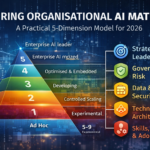
Measuring Organisational AI Maturity: A Practical Scoring Model

IT Project Management
IT Project Management ensures successful delivery of technology initiatives by aligning scope, time, cost, quality, and risk. It combines structured governance with agile execution to deliver secure, scalable, and value-driven IT solutions across organisations.
Key Benefits of our IT Project Management approach
IT Project Management integrates governance, planning, stakeholder engagement, risk control, and performance tracking to deliver technology initiatives successfully. It ensures business alignment, regulatory compliance, predictable delivery, and measurable value realisation.
01
Strategic Alignment & Business Case Management
Ensures every IT initiative is aligned with organisational objectives, ROI targets, and transformation goals. Projects are prioritised based on measurable value, risk profile, and strategic importance to maximise portfolio impact.
02
Scope, Schedule & Cost Control
Defines clear scope baselines, detailed schedules, and cost forecasts. Utilises structured planning techniques, change control processes, and performance tracking to prevent scope creep and maintain delivery predictability.
03
Risk & Issue Management (RAID Governance)
Implements proactive identification and monitoring of risks, assumptions, issues, and dependencies. Escalation pathways and mitigation strategies ensure minimal disruption to timelines and budgets.
04
Stakeholder & Communication Management
Engages sponsors, technical teams, vendors, and end users through structured communication plans. Clear reporting dashboards and governance forums ensure transparency and decision-making efficiency.
05
Quality Assurance & Compliance Oversight
Applies quality standards, testing frameworks, and regulatory controls to ensure solutions meet technical, security, and compliance requirements, particularly within regulated industries.
The IT Project Management Roadmap
IT Project Management follows a structured lifecycle from initiation to closure. It begins with defining objectives and governance structures, progresses through detailed planning and controlled execution, and concludes with formal closure, benefits tracking, and continuous improvement.
Step 01
Initiation & Planning
Define business objectives, scope boundaries, stakeholders, and governance frameworks. Develop a detailed project plan covering schedule, budget, risk register, communication plan, and resource allocation to establish a strong delivery foundation.
Step 02
Execution & Monitoring
Execute planned activities using agile, waterfall, or hybrid approaches. Monitor progress through KPIs, RAID logs, financial tracking, and stakeholder reviews to ensure alignment with scope, cost, and timeline baselines.
Step 03
Closure & Value Realisation
Conduct formal acceptance, documentation handover, and lessons learned review. Validate benefits realisation, measure performance against objectives, and ensure operational readiness for sustainable long-term success.
FAQ – IT Project Management
What is IT Project Management and why is it important?
IT Project Management is the structured discipline of planning, executing, and controlling technology initiatives to deliver measurable business outcomes. It ensures projects are delivered on time, within budget, and aligned with strategic goals while managing risks, stakeholders, compliance, and quality standards.
What methodologies are commonly used in IT Project Management?
Common methodologies include Waterfall, Agile (Scrum, Kanban), and Hybrid approaches. The choice depends on project complexity, regulatory requirements, stakeholder expectations, and delivery speed. Hybrid models are increasingly used in enterprise environments to balance governance with flexibility.
How does IT Project Management handle risks and uncertainties?
Risks are managed through structured RAID logs (Risks, Assumptions, Issues, Dependencies), regular governance reviews, and mitigation planning. Proactive monitoring and escalation processes ensure potential disruptions are identified early and addressed before impacting cost, scope, or schedule.
How is success measured in an IT project?
Success is measured through KPIs such as schedule adherence, budget performance, quality metrics, stakeholder satisfaction, and benefits realisation. Mature organisations also assess long-term value creation, operational stability, and strategic alignment post-implementation.
What role does stakeholder management play in IT projects?
Stakeholder management ensures clear communication, expectation alignment, and decision-making efficiency. Engaging sponsors, technical teams, vendors, and end users throughout the lifecycle reduces resistance, improves adoption, and increases overall project success rates.